My Favorite Chemicals
Use the links below to quickly navigate through this area!
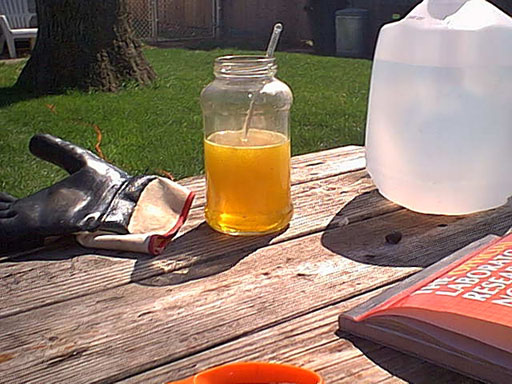
Strangely enough this chemical had not been on this page for the longest time. I was a huge fan of bromic acid for the longest time. The reason actually being perbromic acid. I was always fascinated with perchloric acid and the fact that perbromic acid was so hard to prepare (actually, as far as I knew at the time it was impossible to prepare) it made me wonder about bromic acid containing the highest oxidation state of bromine. Bromic acid decomposes easily although it can be concentrated to ca. 55% using a heat lamp and vacuum, above this concentration it decomposes on its own.
To prepare bromic acid, a soluble bromate is usually dissolved in water and a soluble barium salt added. Sparingly soluble barium bromate precipitates. Barium bromate can then be dissolved in water and acidified with sulfuric acid to precipitate the basically insoluble barium sulfate and leave behind bromic acid (see above picture:
2KBrO3(aq) + BaCl2(aq) ---> Ba(BrO3)2(s) + 2KCl(aq)
Ba(BrO3)2(aq) + H2SO4(aq) ---> 2HBrO3 + BaSO4
Bromic acid is a strong oxidizing acid. The bromate ion can be further oxidized with elemental fluorine or xenon difluoride in the presence of base, the oxidation accompanied by small explosions and the Teflon tubing catching on fire.
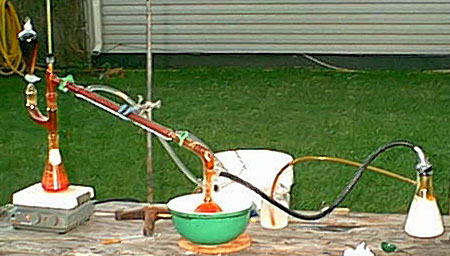
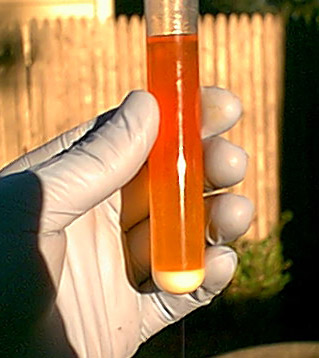
Ahhh... bromine, my dearest friend. I have made bromine on several occasions and have stockpiled it simply for the beauty of its red sheen. Despite its lower rank among the halogens it is still incredibly reactive. It will even attack platinum and palladium but sodium dropped into bromine will form a non-reactive coating and will simply float on it (Until you poke it with a spatula or something, then it might explode). Bromine has the same astringent smell as chlorine but it is a different beast all together. Additionally hydrobromic acid, the bromine analogue of hydrochloric acid is a stronger acid due to the greater size of the bromine atom and the weaker Hydrogen-Bromine bond.
There are also a number of interesting compounds that bromine can go into, like nitrogen tribromide, bromine pentafluoride, and of course wondrous things like bromine azide, and cyanogen bromide. Still, it is dangerous stuff, by DOT classifications, it is a Poison Inhalation Hazard Zone-A. Which basically means without an all-pack box when you ship it by truck you cannot pack it with hardly anything else aside from other poison inhalation hazards. (I think that is overkill though, chlorine gas is only a Poison Inhalation hazard Zone-B and I think I would much rather drop a 1 L bottle of bromine on the ground than sheer the head off a 1 L chlorine cylinder).
If you wanted to see bromine there are two routes to do so! You could simply buy it although the hazmat charges might be killer or you could make it! Here are two different methods (Remember, bromine, like most things on this page, is a dangerous element, its isolation should not be attempted without experience and a knowledge of its dangers):
Electrolysis!
Electrolysis of a concentrated solution of sodium or potassium bromide will
yield bromine. To do so graphite electrodes as the bromine will react with most anything else (it will eat the graphite but slower than
other elements). The process looks something like this:
2Br(aq) ----> Br2(l) + 2e-
In practice losses by this process are great because at the other electrode hydroxide ion is being generated, so essentially sodium or potassium hydroxide is being generated in the same aqueous environment as elemental bromine. And when the two of them come together... Let's just say Good Bye to bromine. Of course this complication could be avoided if you were using a molten salt, but that's a whole different story.
A great detailed example of this method of production in action is detailed at:
http://www.crscientific.com/article-bromine.html
Via Oxidizing Agent
There are a number of methods to isolate bromine from a bromide salt and an oxidizing agent, usually in an acidic environment. That is because bromide is easily oxidized to bromine and because the resulting bromine is only sparingly soluble in water it pools at the bottom of the aqueous solution. The most classic combination of reagents is sulfuric acid, potassium/sodium bromide, and manganese dioxide followed by distillation of the product. However many oxidizing agent/acid combinations will work, my favorites being, bromide/sulfuric acid/hydrogen peroxide and bromide/bromate/sulfuric acid. Both of which have been featured in my experiments log.
You know you want it! This colorless fuming liquid may seem tame but it will react with every known element except nitrogen, oxygen, and inert gasses, and to top it off it will explode in if it comes into contact with water. You think it's a hazard to your health? You bet! This stuff is not only toxic in the normal sense but it is corrosive to a fantastic extent! An to make this marvel of nature....what do you need? Just a Copper vessel at about 200ºC and some Bromine diluted with Nitrogen and Fluorine!
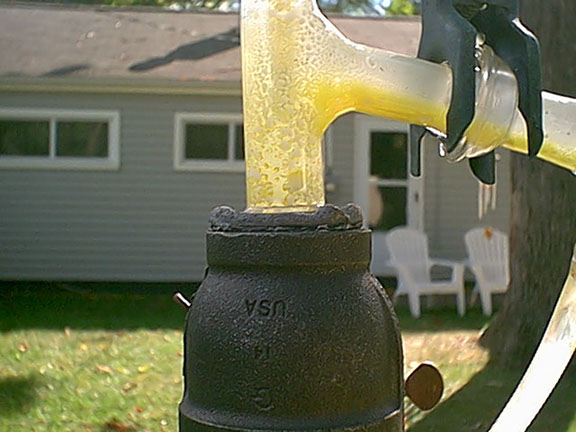
What's so great about Carbon Disulfide you may ask. Well aside from the fact that it contains Carbon and is considered an inorganic compound (It is a general rule of thumb that anything containing Carbon is organic) and that it has an astronomically low point of spontaneous ignition (< 100º C) there really isn't much interesting about it. Oh, and it dissolves sulfur and many other things! It's a happy compound, ask it yourself, just intimately mix a batch of Sulfur and Charcoal and heat, collect the distillate and say "Are you happy?" (Actually it's probably not to happy, it smells terrible!) Classically it was prepared by heating charcoal with sulfur vapor at high temperatures but that method is easier said than done and even with a propane torch the temperature of combination of these two elements seems unreachably high.
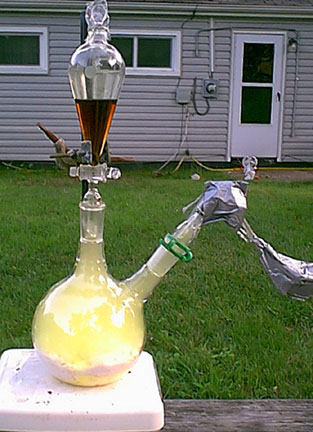
Chlorine would have to be my second favorite halogen. Maybe it's because it's everywhere and I don't want to just jump on the same boat as everyone else. When you ask most people on the street what their favorite halogen is (if they understand what you are talking about of course) they would say something like:
"Halogen! When it comes to halogens Chlorine is the one for me!"
Regardless of this immense popularity it must be pointed out that this element is exceedingly poisonous and causes extensive tissue damage and is a free floating, dense, green gas. As a matter of fact it was on its own in WWI as a poison gas. (Until it was displaced by early mustard gasses and phosgene) There are numerous ways to make Chlorine gas but I will only detail one here, kids, do not try this one at home!!!!
2Ca(OCl)2 + 4HCl(aq) -----> 2CaCl2 + 2H2O + 2Cl2(g)
Simplicity itself, eh? Not really, except for small amounts of the gas this reaction is unreliable, and a waste of reagents. Luckily, if you need lots of chlorine you likely know of a better route than this old method.
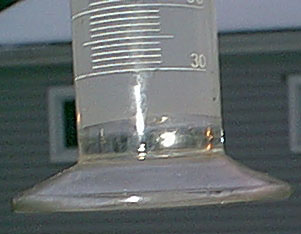
Ahhhhhh!!!! Chloroform, so fun to say! The stuff that they put people out in the movies with. Regardless of the image movies project, chloroform is quite dangerous. It causes depression of the CNS (Central Nervous System) and therefore unconsciousness and soon death. It's also toxic to the liver and one of its metabolic byproducts is HCl which you definitely do not want in your system. For some reason I thought that it would be green but it is quite clear and insoluble in water and more dense then water. Over time it decomposes if it is given access to oxygen and faster if it gets some UV rays. The main concern here is phosgene which is the most toxic of the decomposition products and could feasibly accumulate to lethal concentrations in an old bottle of chloroform. For this reason methyl or ethyl alcohol is usually added to chloroform to inhibit this process, the resulting reaction between phosgene and alcohol producing organic carbonates.
Making Chloroform like most things on the page is quite easy. The reaction is a Haloform reaction, during this reaction The methyl group of a ketone is attacked by a strong neucleophile in a SN reaction. Several substitutions occur until Three Chlorine atoms replace the three hydrogen atoms and finally a hydroxide group attacks the C-C bond severing it, this is followed by the H on the hydroxide detaching immediately (Leaving a Carboxilic Acid) the H attaches itself to the negative site on the CCl3- molecule and completes the Choloroform. If you want a recipe it would run along the lines of "Mix a metal Hypochlorite with a Ketone and decant off the top layer." If you don't know what a metal Hypochlorite and a Ketone are then you most definitely should not be making Chloroform and the safety measure in this paragraph has worked. Additionally, anything contaminated with chloroform above 6ppm is hazardous waste (it gets the D022 code) and hence that water that you just decanted off the top of your chloroform better be disposed of in accordance with EPA standards.
Chromium Trioxide, better known as Chromic Acid (H2CrO4) which exists only in solution is a powerful oxidizing agent. Ethanol vapors will ignite in its presence and it max explode on contact with reducing agents. Its also corrosive to the skin and carcinogenic and it is made up of beautiful purplish-red crystals. When Hydrogen Peroxide is added to Chromic Acid a beautiful blue solution is formed and the blue color can then be extracted with ether! (Perchromic Acid is its name, with the probable formula of (HO)4Cr(OOH)3) Chromic acid is exceedingly simple to make, concentrated Sulfuric Acid is added to a solution of Sodium Dichromate, the solution cooled and the liquid decanted followed by washing of the crystals. The reaction looks something like this....
K2Cr2O7 + 2H2SO4 -----> 2KHSO4 + 2CrO3 + H2O
(Diethylamino)sulfur Trifluoride (CH3CH2)2NSF3
What the heck is this stuff? That's what a number of you
are wondering. What if I called it DAST? Would that help?
Probably not, but I've made plenty of this stuff in my current occupation and
I've developed a fondness for this horrible horrible liquid. Not only is
it toxic (converts to HF in the body), corrosive (it will eat glass if you give
it the time of day), reactive (don't let it touch water whatever you do), it's
also potentially explosive. Holy hell some of you might be saying, why
would I want it? Well, for one it converts alcohols to fluoro compounds,
it converts aldehydes and ketones to geminal difluorides, it it does so without
a many of the byproducts normally associated with using straight sulfur
tetrafluoride (because of course no one would want to work with that compound).
I don't know what it is between me and solvents but I just like them for some reason! I just thought that ether was funny when I first heard about it, and the fact that it forms dangerous peroxides intrigued me, therefore I had to make it! Ether is made by a dehydration reaction..... that means that two molecules are brought together and join creating a molecule of water (Identical to a condensation reaction). In this case the two molecules being brought together are Ethyl Alcohol, they both have a hydroxide group with the formula -OH and therefore there are 2 H's and 2 O's, two of those Hydrogens and one of those Oxygens are used in the dehydration reaction and the remaining Oxygen forms the bridge between the remaining Ethyl groups. The molecule of water is absorbed by the concentrated Sulfuric Acid and the Ether is distilled out of the mixture. The reaction is something like this:
2CH3CH2OH ------> (In the presence of heat and Sulfuric Acid) CH3CH2OCH2CH3 + H2O
There is a bit of an art to this. If the temperature is too high, if the addition rate is too fast, if you don't do things just right, you get a lot of unreacted material, byproducts, etc. So the synthesis itself should always be done by the book. It should be noted that peroxide contamination in fresh ethers is somewhat unheard of but they can accumulate fast, there are many tests out there to check ethers for peroxide, most of them colormetric and involving iodides. Should your ether be positive for peroxides, ferrous sulfate can rid your ether of them and a quick distillation thereafter will resolve the problem completely. Still, care should be taken with old ethers as peroxides like to accumulate around caps where they can go boom.
Hydrogen Fluoride... its' MSDS (Material Safety Data Sheet) reads like a horror story, it eats your bones, it's exceedingly toxic, kills you slowly over time, eats glass, causes explosions, and other more insidious things that I will not go into detail in here.... But I like it! The likeing of this compound definitely stems from its reputation, I've never even handled it! Don't make it, never ever make it.....
H2SO4 + CaF2 -----> CaSO4 + 2HF(g)
This is the classical preparation for this compound. The reagents are also easy to come by. For centuries this method has been used by people to etch glass and such but it should not be attempted by the novice!
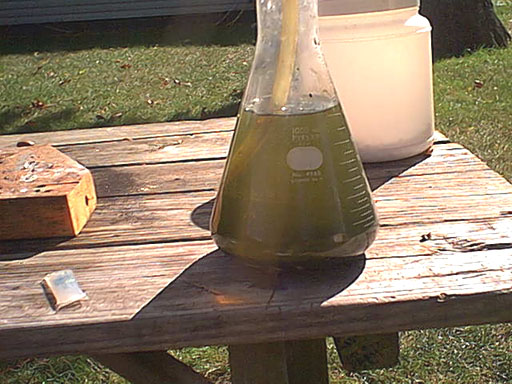
Do you know what Hydrogen Sulfide is? If you don't right know, don't make it ever, you'll die! (I'm being like 87% serious here) Now that that's out of the way what do you want to know? Maybe you want to know why I like this terribly poisonous compound (I could like Hydrogen Cyanide or Cyanogen, those are worse and only 1/3 of the population can smell Cyanide) I might like it because of how dangerous it is, but not likely, I like it because it does so much! Bromine in solution, no problem, just add H2S and now it's a solution of HBr and solid filterable sulfur, it can also precipitate some metals as their sulfides and it's easy to make :)
FeS + 2HCl ------> FeCl2 + H2S
Hydrogen sulfide is a gas, and in low concentrations it has that fresh rotten egg aroma we all crave. However in larger concentrations (like those that occur when a joint in your setup is improperly sealed) it goes straight for the smell receptors in the nose and kills them, making you immune to its foul odor. "Ha ha!" You yell impervious to it's stink before you suddenly fall over dead, thinking that the smell has gone away from lack of source. Be very careful around this compound, I am honestly surprised it does not kill more of us.
Mainly I like Lead because it's dense, not as dense as Osmium but dense enough to be my friend. Plus it is the end product of radioactive decay and therefore you can look at Lead as though it were once the mighty Uranium! I think that lead has gotten a bad rap lately, it's not as bad as people make it seem although it is toxic, but the only thing that makes it remotely dangerous is that it is a communitive poison and therefore tiny doses over time may eventually cause terrible sickness. Lead is most commonly found in lead storage batteries from automobiles although obtaining it in this manner is not the safest way to do so and I would recommend buying it, again, you don't want to buy lead because it's cool, don't buy it if you don't need it and you're not a chemist!
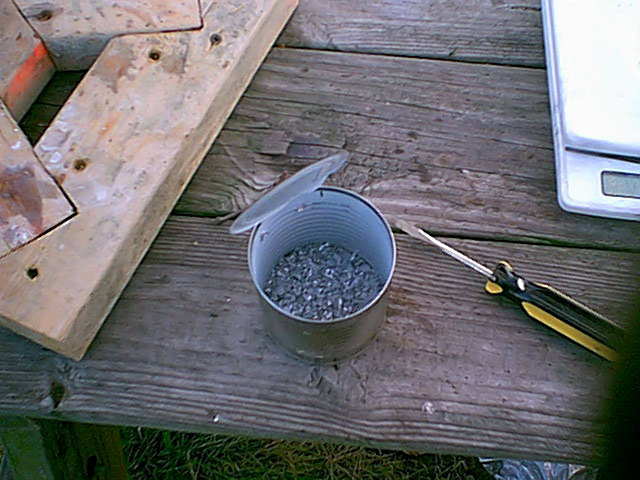
Magnesium is one of my favorite metals because it is so useful, disperse it in a stochiometric proportion with a metal oxide, ignite, and in no time the metal oxide is reduced to its uncombined state, amazing! Aluminum could also be used for this but Magnesium is more energetic. It can also be used to generate hydrogen gas by addition of Hydrochloric Acid to the solid. It can also displace elements in solution and numerous other useful reactions, here are some examples of what it can do!
3Mg(s) + Fe2O3(s) -----> 3MgO(s) + 2Fe(l) Thermite Reaction
Mercury, Quick Silver, Hydrargyrum, famous for its amalgams and toxicity. All mercury compounds are highly toxic (Correction, all soluble mercury compounds are highly toxic, all the others ones are just pretty toxic). Its vapors cause brain damage and it's so dense that it just rolls into the cracks to evaporate later and cause more brain damage. Despite this it is insoluble in water and mineral acids with the exception of nitric or concentrated boiling Sulfuric. I like it because it's shiny and looks neat and forms neat compounds like Mercury Fulminate and pretty iodides and other compounds! Mercury can be found uncombined in Cinnabar, its main ore.
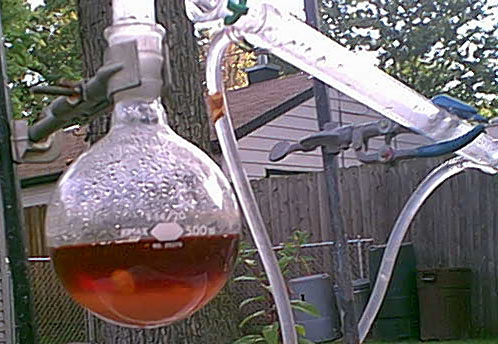
My favorite kind of Nitric Acid is Red Fuming Nitric Acid although the one I most commonly us is just regular 70% solution. Although it is a weaker acid than Sulfuric it does dissolve things that Sulfuric does not, such as Mercury, Silver, Copper, and more. Phosphorus, Carbon, and Silicon are all oxidized to their oxides (H3PO4, CO2, SiO2). It also releases Nitrogen Oxides, my favorites being Nitric Oxide (A gas but also a beautiful blue liquid) and Nitrogen Dioxide (A dark red/brown fuming/highly toxic liquid). These impart a green tinge in low concentrations (green being my favorite color). Making Nitric Acid is not too dangerous but should never the less not be attempted by most people:
KNO3 + H2SO4 -----> KHSO4 + HNO3
Distillation is the preferred method of separation of the
nitric from the sulfuric, sulfates, nitrates, etc.
If the heat is too high then formation of Nitrogen Oxides will occur, and those can be quite nasty!
The 70% solution that comes over is the azeotrope, so concentrated sulfuric
should not be used for this concentration, if the anhydrous acid is desired,
concentrated sulfuric is used but the distillation is carried out under severely
reduced pressure.
Nitroglycerine (CH2NO3CHNO3CH2NO3)
Who doesn't like Nitroglycerine? It is used in heart medications and has saved many lives, and its fame for explosiveness expressed in movies is not to exaggerated. You see it in movies and you say something like "Whoh! That's neat, I want!" well, you can't have it, it's classified as an explosive and you need a permit from the BATF in order to posses it or make it, besides, it's not much to look at, just a thick liquid, you could get the same look from glycerin, from which it's made by mixing with concentrated Nitric and Sulfuric acid.
It's a yellow-red liquid or yellow gas, it's decomposed by water and is one of the oxidizing agents in Aqua Regia. It's also, like most everything else on this page, really toxic, a strong irritant to everything organic. It has a boiling point of -5.5ºC and can therefore be easily liquefied even with salt water solution. Plus the preparation of it is so easy that most anyone could figure it out, still, I will include a quick preparation for it here...
2NO2 + KCl -----> KNO3 + NOCl
With 2.4% moisture present in the KCl
Colorless.....fuming.....hygroscopic liquid....unstable in concentrated form, decomposing into Chlorine Oxides. It just makes me sooooooo happy to think of this acid, which is the strongest of the common acids. It reacts with water similar to Sulfuric Acid evolving heat and detonates by shock or heat, it will ignite vigorously with organic material and it is definitely toxic by all routes. It can be made, like many other acids, by distilling its salts with Sulfuric Acid. Further concentration can take place by distilling the crude product with three or four times the volume of Sulfuric Acid. Oh yeah, its vapors can react with numerous metals to form unstable Perchlorates which may detonate when shocked or heated. Ohhhhh scary....
Phosgene COCl2
How I love thee, let me count the ways... How can a man love a poison gas? Well, for over a year now I have been a devoted phosgene chemist. On a day to day basis at work I meet up with this wicked chemical. The good, phosgene is an excellent electrophile, the shortest distance between anime and isocyanate is... you guessed it, phosgene. The bad of course is that it's highly deadly. Well, that might be a bit of an overstatement, it's not on par with HCN or any of the super baddies. But it still ranks up there. A lot of newbies to chemistry think from the name that there should be phosphorus in there somewhere just because of the name but that's not the case. The name stems from the method of its first creation. John Davy (Brother of Sir Humphry Davy the patron saint of chemical exploration) combined carbon monoxide and chlorine gas in the presence of light to yield this deadly wonder. The name literally means light born or born from light depending on who you ask. This compares well with phosphorus which means light bearer, light I create, light maker depending on whom you ask. Which makes me wonder if I could combine carbon monoxide and chlorine in a flask then burn some phosphorus nearby to make phosgene, kind of a nice circle.
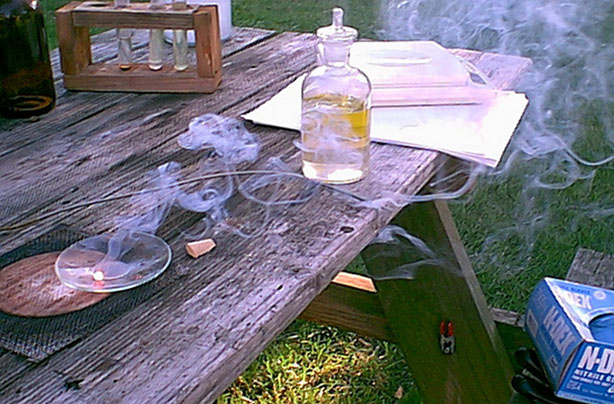
Phosphorus is nearly my favorite element, probably because there is so much
variety to it. First off there is a white allotrope, this Phosphorus will spontaneously burst into flame in the air! It's also exceedingly toxic causing a condition known as phossy jaw, a terrible progressing ailment where by your jaw atrophies and falls off. Another allotrope is Red Phosphorus, it has a wonderful red color, but this color change is also accompanied by a loss of properties, it no longer spontaneously ignites in the air and it is much less toxic, it still finds uses in match book covers though. There are two other less common allotropes of Phosphorus a black type that resembles Graphite and is electrically conductive and a Green type of which I know nothing
(likely just some in-between allotrope). It's just so neat! Also most allotropes of Phosphorus are nearly insoluble in everything.
Part of my liking of this chemical is my liking of Sulfur, in order to make it you have to melt Sulfur (Molten Sulfur looks really neat) and bubble Chlorine gas through it (I like Chlorine, just look above!) and collect the distillate. Allow the distillate to cool and bubble more Chlorine through it to saturation and voila! A really neat, red liquid that decomposes at high temperatures and decomposes by contact with water, and is, of course very toxic (maybe I like it because it reminds me of bromine).
S8 + 4Cl2 -----> S2Cl2
S2Cl2 + Cl2 ----> 2SCl2
There are three solid modifications to this compound Alpha, Beta, Gamma with different melting/subliming points. Sulfur Trioxide reacts with water to form Sulfuric Acid and heat, Fuming Sulfuric Acid is made by dissolving Sulfur Trioxide in Sulfuric Acid, this type of acid is also referred to as oleum. Sulfur trioxide is a major dehydrating agent and is majorly toxic. The industrial process involves passing a mixture of Sulfur Dioxide and Oxygen over a heated Vanadium Pentoxide catalyst. The more ambitious person could make Sulfur Trioxide by reacting Sulfur Dioxide made by burning Sulfur in Oxygen, with Ozone made by massive amounts of electrical energy.
Sodium Perxenate (Na4XeO6*8H2O)
Had to mention it, it's probably one of the most powerful oxidizing agents known, and most likely toxic.
Honorable Mentions
Well, I didn't want to include all the neat chemicals, it would take to long to write up, so here's a list of other chemicals I like but didn't feel like writing about, in no particular order:
Cesium (The most reactive alkaline metal)
Uranium (Highest atomic Number natural Element)
Sodium (Neat stuff)
Potassium(Even better)
Tungsten (You ever hear the sound sintered Tungsten makes when struck?)
Zirconium (I like it!)
Osmium (Densest element known)
Lithium Perchlorate (More acitve Oxygen then liquid Oxygen!)
Chlorine Dioxide (Pretty and strong)
Potassium Permanganate (It's a fun and happy thing, being purple does that)
Cobalt (I like the sound of it)
Gallium (Melts in your hand, and mouth!)
Sulfur Dibromide (I like Bromine better then Chlorine)
Arsine (Flammable)
Water (We all need it and it does so much for us, thank you water!)
S-(2-diisopropylaminoethyl)-O-ethylmethylphono-thiolate (It likes you!)
Nitrosyl Perchlorate (Decomposes to Nitric Acid and Perchloric Acid in water)
Zinc Sulfate (Glows in the Dark!)
Potassium Hydroxide (I had to have one Hydroxide somewhere!)
Periodic Acid (Evidence of
Although most of this came from memory I used Hawley's Condensed Chemical Dictionary® as a reference source, please excuse any spelling or grammatical errors.